Notes on compounding, in money and in skills
The same arithmetic that grows savings also grows knowledge. A look at what that means in practice.
Published
14 September 2026 · 5 min read
Albert Einstein almost certainly never called compound interest the eighth wonder of the world. The line is attributed to him in hundreds of books and websites, but nobody has found it in anything he wrote or said, and it seems to have been attached to his name decades after his death. It survives anyway, because the idea deserves it. Compounding is simple arithmetic with strange results, and once you notice it, you start seeing it far beyond money.
The arithmetic is old. Leonardo of Pisa, better known as Fibonacci, included problems about interest on loans in his Liber Abaci of 1202, the book that helped bring Hindu–Arabic numerals into European commerce. Merchants in the Italian cities that followed needed to know how debts grew, and the earliest known statement of the shortcut now called the rule of 72 appears in Luca Pacioli’s Summa de arithmetica of 1494, the same book that first printed a full description of double-entry bookkeeping. Pacioli gave it without proof, as a trick every reckoner should know: divide 72 by the rate of interest, and the answer is roughly the number of years it takes for money to double.

The numbers are worth working through once by hand. Invest 1,000 at 7 per cent a year and reinvest everything it earns. After one year you have 1,070. After ten years you have about 1,967, so the money has roughly doubled, just as the rule of 72 predicts. After thirty years you have about 7,612. After forty years, nearly 15,000. Two things stand out. The first is that most of the growth comes late. In the first decade, the money gains about 970. In the fourth decade alone, it gains about 7,400, more than seven times as much, though nothing about the rate or the effort has changed. The growth is the same proportion every year. It only looks slow at first because it is a proportion of something small.
The second is that small differences in rate become enormous differences in outcome. At 5 per cent a year, the same 1,000 becomes about 7,040 after forty years. At 9 per cent, it becomes about 31,400. A difference of four percentage points, which sounds modest in any single year, produces more than four times as much money over a working life. This is why investors who think in decades care so much about fees. A fund that charges 1.5 per cent a year instead of 0.2 per cent is not taking a little off the top. Over forty years, it can take a large share of the final result.
Benjamin Franklin made a famous experiment out of this. When he died in 1790, he left a thousand pounds each to the cities of Boston and Philadelphia, to be lent at interest to young tradesmen for two hundred years, with part of the fund to be spent after a hundred years and the rest at the end. The funds did not grow as fast as Franklin’s own calculations hoped, because loans went unpaid and rules changed, but by 1990 they were worth several million dollars between them. The experiment shows both sides of the idea: the enormous power of patient growth, and how easily it is reduced by the small failures that interrupt it.
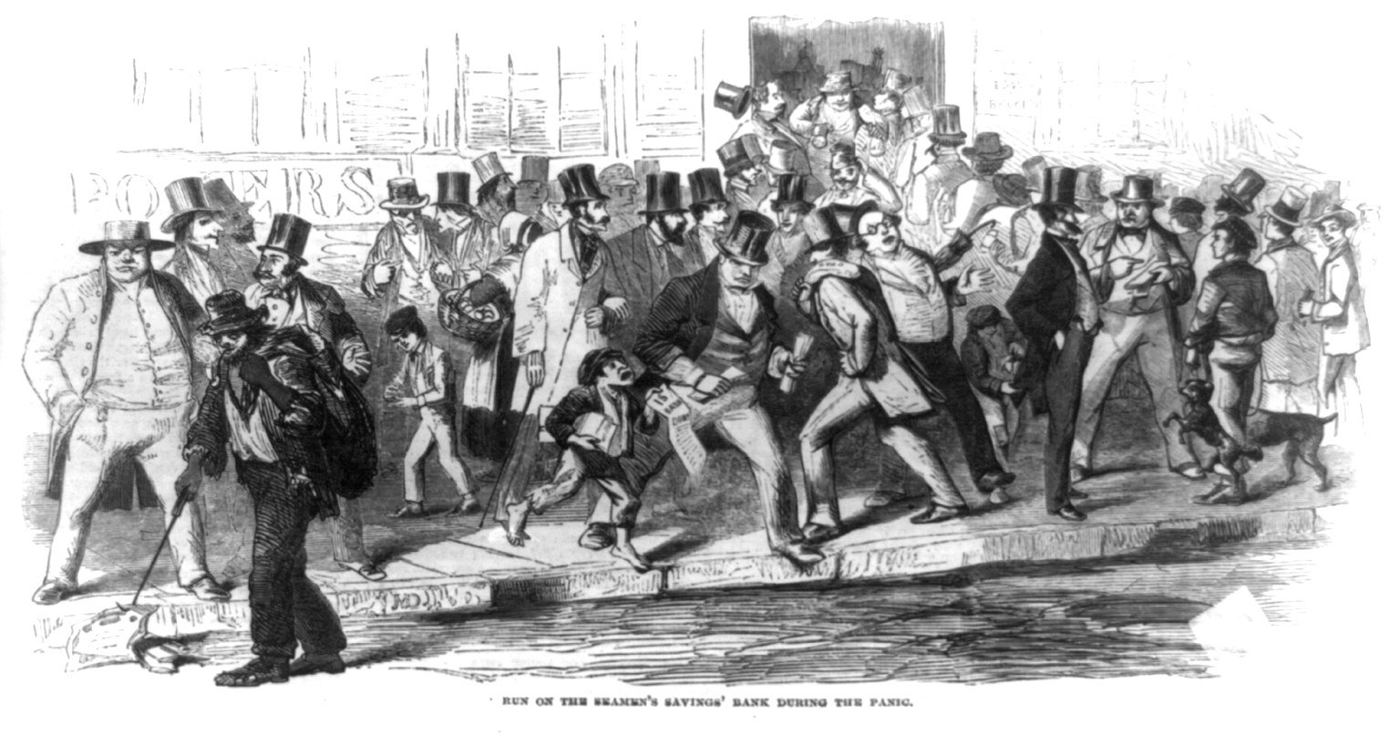
That is where the real difficulty lies. The mathematics says start early and do not interrupt the process. Both are hard for human beings. The early years of compounding look unimpressive, which makes them easy to skip or postpone. Saving a small amount at twenty-five feels pointless compared with saving a larger amount at forty, even though the earlier saving may end up worth more. And the biggest damage comes from breaking the chain: selling in a panic after prices fall, withdrawing gains instead of leaving them to grow, or abandoning a plan after a few disappointing years. Compounding rewards a kind of patience that feels, at the time, like doing nothing.
The same arithmetic seems to apply to knowledge and skills, because what you learn makes the next thing easier to learn. A little statistics makes economics papers readable. Being able to read those papers makes finance easier to understand, and understanding finance makes company reports faster to read. Each new idea has more existing ideas to connect to, so it is easier to remember and easier to use. Skills open doors to projects, and projects teach skills you would not have found in any course. Researchers on reading have even given a name to one version of this, the Matthew effect, after the line in the Gospel of Matthew about those who have being given more: children who read well early read more, which makes them read better still, while those who struggle fall further behind.
The pattern is the same as with money. The early stages feel slow, and they are often discouraging, because effort produces so little visible result. Most of the payoff comes later, sometimes much later. And consistency matters more than intensity. An hour of study a day for a year usually does more than a heroic week followed by months of nothing, for the same reason that regular saving beats occasional windfalls.
The analogy has limits, and they are worth taking seriously. Money in a savings account compounds automatically. Knowledge does not. It decays when it is not used, so the “interest rate” on what you learn depends on how often you practise and apply it. Some knowledge also goes out of date: the details of a software tool, the rules of a tax system, the leading theory in a fast-moving field. That is a strong reason to favour fundamentals, the ideas that keep their value for decades, over details that expire. Probability, clear writing, the logic of accounting and the history of how ideas changed are slow to depreciate. The menu structure of this year’s app is not.
There is also no guarantee that compounding continues. Businesses that grew for decades can stop; skills that were valuable can become common or obsolete. The rule of 72 assumes a steady rate, and real life rarely offers one. But even with these limits, the lesson holds better than most. Start small, but start now. Protect the chain, because a little every day beats a lot once in a while. Favour the things that make future learning easier. And judge progress over years rather than weeks, since that is the only time scale on which compounding shows what it can do.
Ayoub Khallok keeps this archive of essays, research, lessons and notes, written to understand things more clearly. More about Ayoub.