The Intelligent Investor
Margin of safety, Mr. Market, and the temperament that investing really requires.
Published
20 August 2026
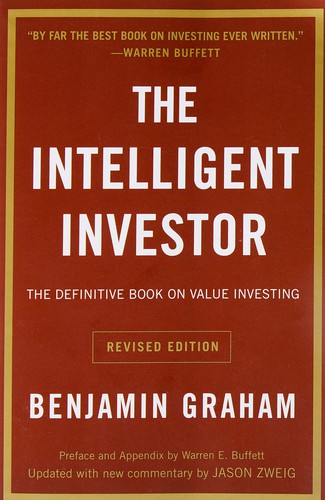
Benjamin Graham learned about risk the hard way. He arrived on Wall Street in 1914, straight out of Columbia, and within fifteen years had built a successful investment partnership. Then came the crash of 1929 and the long slide that followed, and between 1929 and 1932 his fund lost most of its value. Graham survived, rebuilt, and spent the rest of his career trying to work out a way of investing that could withstand that kind of disaster. He taught a famous course on security analysis at Columbia Business School for decades, and in 1934, with David Dodd, he published Security Analysis, a dense textbook for professionals. The Intelligent Investor, first published in 1949, was his book for everyone else.
Warren Buffett, Graham’s most famous student and later his employee, has called it by far the best book about investing ever written, and has singled out two chapters, the eighth and the twentieth, as the most important. I read the revised edition with commentary by the financial journalist Jason Zweig, which adds a modern essay after each of Graham’s chapters, updating his examples with the dot-com bubble and other more recent episodes. It is a long book, and much of it is about matters that have changed beyond recognition since Graham’s last revision in the early 1970s. But its core, which is about temperament more than technique, has hardly aged at all.
Graham begins with a distinction that sounds simple and turns out to be demanding. An investment operation, in his definition, is one that, after thorough analysis, promises safety of principal and an adequate return; anything that does not meet those conditions is speculation. Each part of the definition does work. Thorough analysis means actually studying the facts rather than following a tip or a trend. Safety of principal means protection against permanent loss, not just against a bad quarter. An adequate return means accepting a reasonable result rather than reaching for an exceptional one. Graham does not condemn speculation outright. He accepts that people will do it, and suggests keeping it to a small, separate amount of money. The real danger, he argues, is speculating while believing that you are investing, and the definition is meant to make that confusion harder.
The eighth chapter introduces the book’s most famous character. Imagine, Graham says, that you own a small share in a private business, and that one of your partners, a man called Mr. Market, comes to you every day offering either to buy your share or to sell you his, at a price that he names. Mr. Market is obliging but emotionally unstable. Some days he is euphoric and can see only good news, and he names a very high price. Other days he is gloomy and can see only trouble ahead, and he names a very low one. The value of the business itself has not changed in either case; only his mood has. You are under no obligation to deal with him. When his prices are foolish, you can ignore them, or take advantage of them. The mistake is to let his moods become yours, to feel richer or poorer, braver or more frightened, according to what he offers that day.
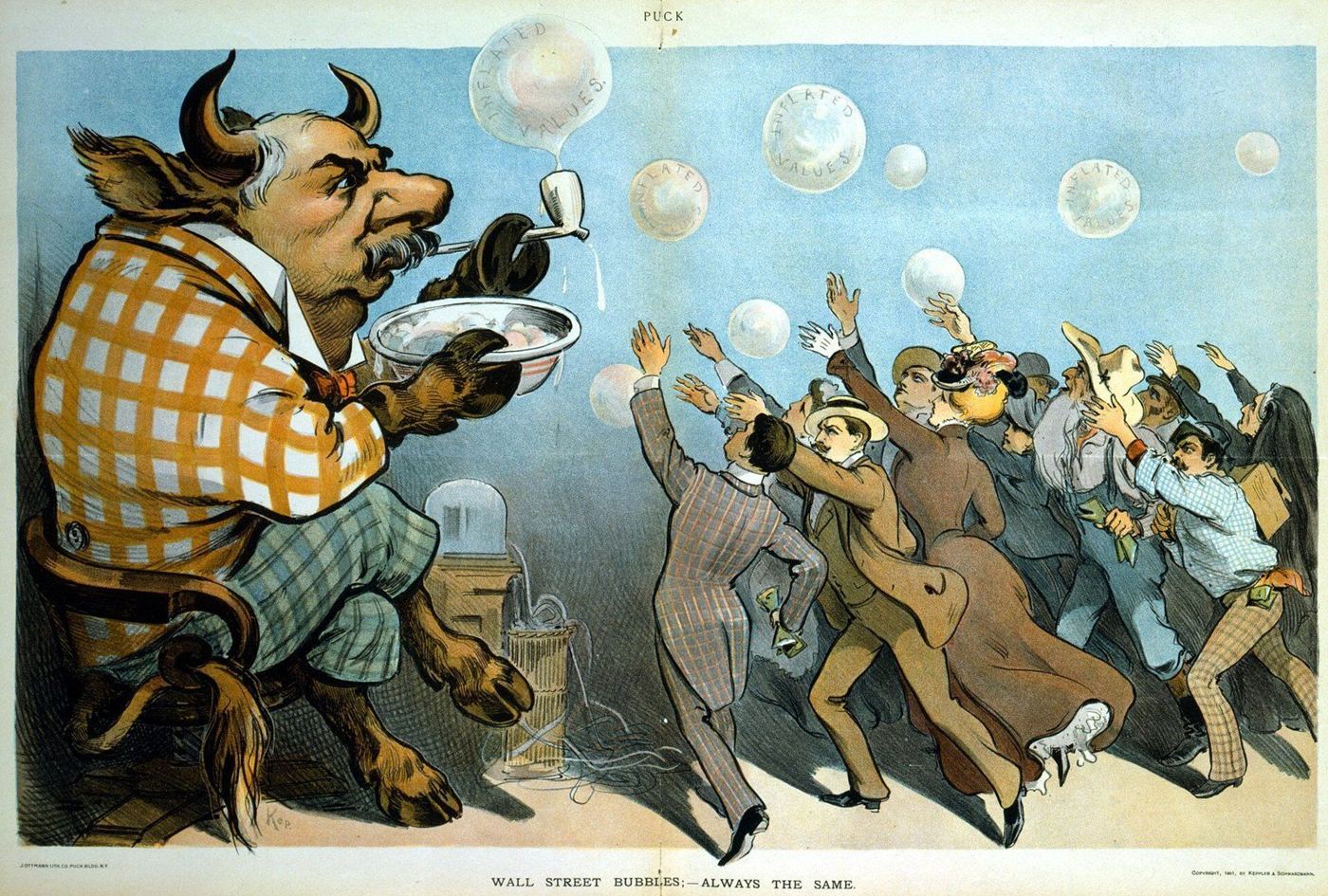
The image works because it turns an abstraction, market prices, into a person whose behaviour is easy to judge. It also contains Graham’s most important psychological insight. The investor’s chief problem, he writes, and even their worst enemy, is likely to be themselves. Most people who lose money in markets do not do so because they lack information or intelligence. They lose it by buying after prices have risen, because rising prices feel like confirmation, and selling after they have fallen, because falling prices feel like a warning. The discipline Graham asks for is not cleverness but steadiness.
The twentieth chapter names the principle that holds the book together: the margin of safety. Graham’s advice is to buy a security only when its price is well below a conservative estimate of what the underlying business is worth. The gap between the two is the margin of safety, and it protects the investor against everything that can go wrong: errors in their own analysis, bad luck, and a future that turns out worse than expected. Graham compares it to the engineering of a bridge, which is built to carry far more than the heaviest load it is ever expected to bear. The investor does not need to predict the future precisely. They need to pay a price low enough that being somewhat wrong does not ruin them.
Between these ideas, the book offers a great deal of practical guidance, organised around two kinds of investor. The defensive investor wants safety and freedom from bother. For them, Graham recommends a simple, diversified portfolio divided between high-grade bonds and the shares of large, established, conservatively financed companies, with the balance between the two kept within limits and adjusted only occasionally. The enterprising investor is willing to devote serious time and effort, and much of the rest of the book, with its detailed criteria for selecting undervalued shares, is written for them. Graham is clear that the two roles should not be mixed. The defensive investor should not dabble in enterprising methods, and the enterprising investor needs to be honest about whether they really have the time, knowledge and temperament the role requires.
A great deal has dated. The interest rates, tax rules and companies that Graham discusses belong to another world, and some of his specific formulas for picking shares have been made less useful by the very success of his ideas, since bargains of the kind he describes are now hunted by computers and large funds. The development of cheap index funds after his death has also given the defensive investor a simpler option than any he could have described, although he anticipated the spirit of it. Zweig’s commentary handles these changes well, and the combination of old chapter and new essay makes the book read like a dialogue across seventy years.
What has not dated is the attitude. Know whether you are investing or speculating. Treat market prices as offers you are free to refuse, not as verdicts on your worth. Insist on a margin of safety large enough to survive your own mistakes. And above all, watch yourself, because the most dangerous participant in your financial life is likely to be the one making your decisions. Graham learned that lesson in the hardest possible way, and the book is his attempt to let others learn it more cheaply.
Ayoub Khallok keeps this archive of essays, research, lessons and notes, written to understand things more clearly. More about Ayoub.