On the Origin of Species
Charles Darwin's case for evolution by natural selection, the book that changed how we understand life.
Published
26 October 2026
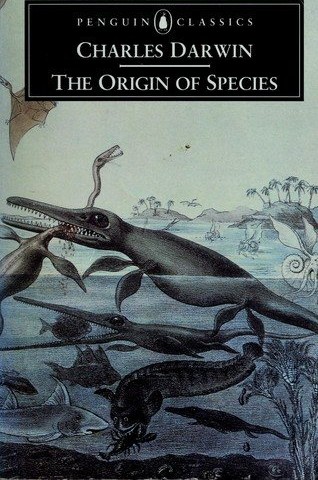
Charles Darwin called On the Origin of Species “one long argument”, and the phrase is exact. The book that changed how human beings understand themselves does not read like a manifesto or a revelation. It reads like a patient case built by someone who expected to be disbelieved, setting out evidence from pigeon breeders, barnacles, fossil beds and island birds, and stopping again and again to raise the strongest objections against himself. Darwin had been working on the theory for more than twenty years when it was published in November 1859, and he published then only because the naturalist Alfred Russel Wallace, working in the Malay Archipelago, had independently arrived at the same idea and sent him an essay describing it. What appeared was, in Darwin’s eyes, a hurried abstract of a much larger book he never finished.
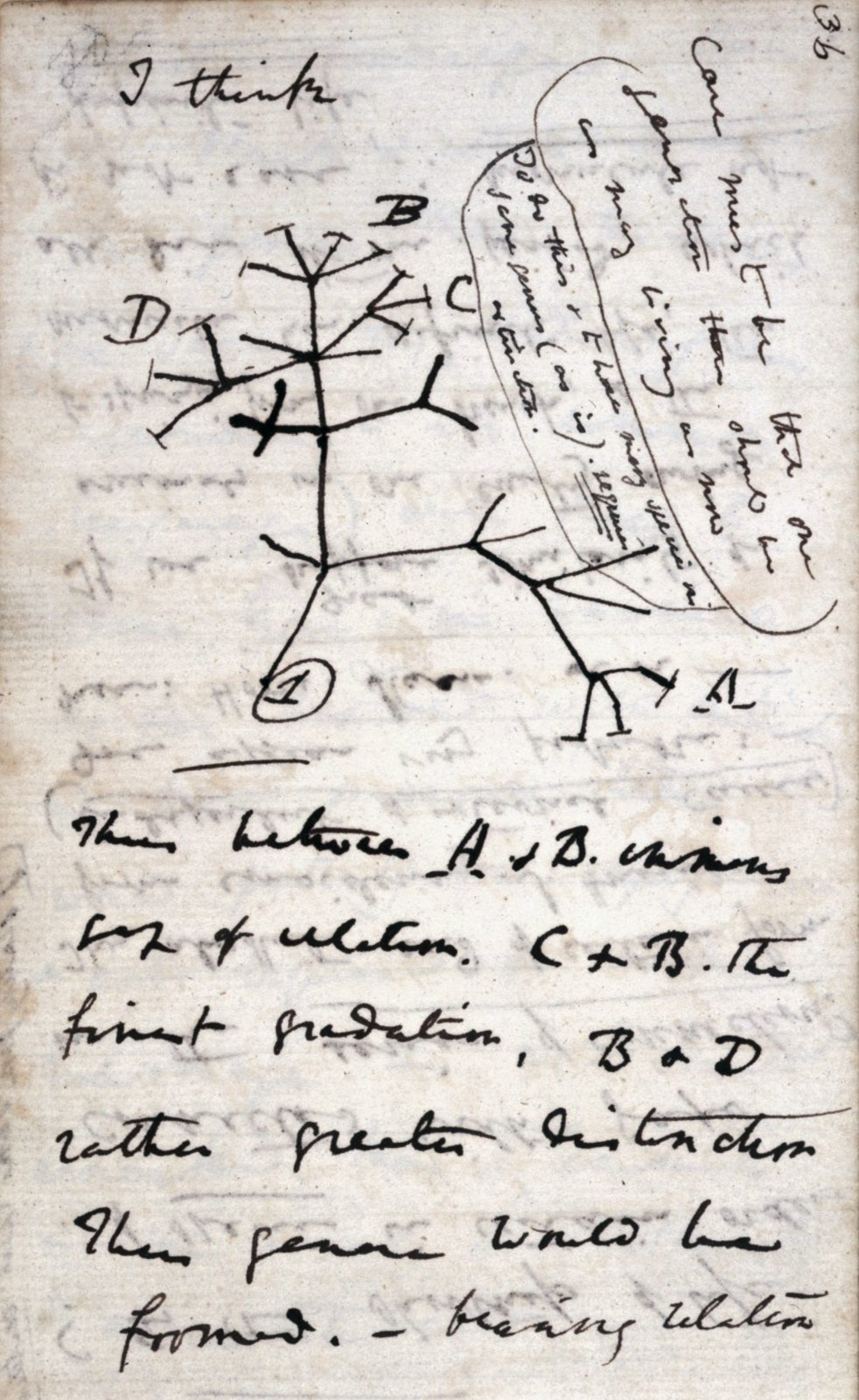
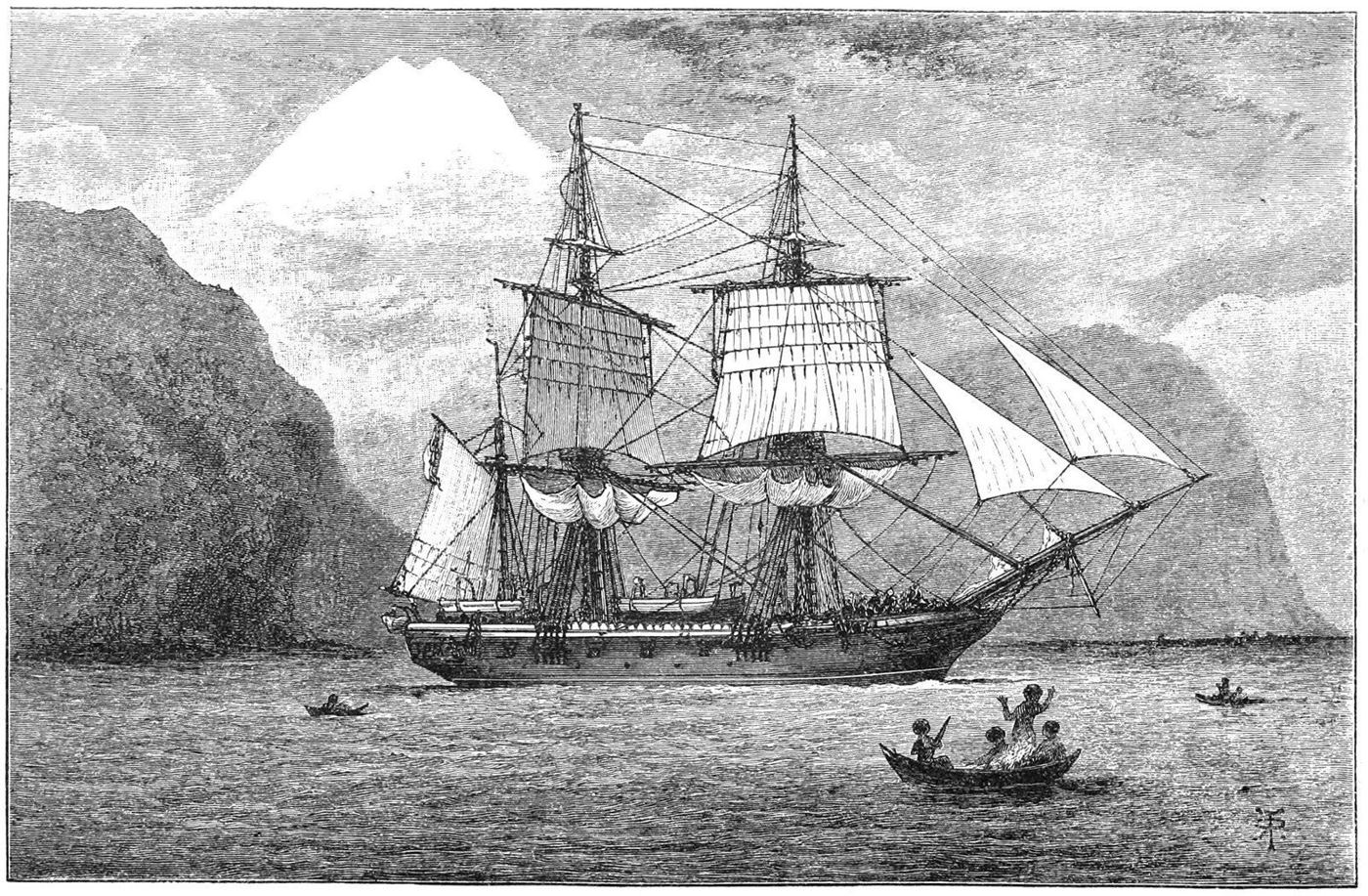
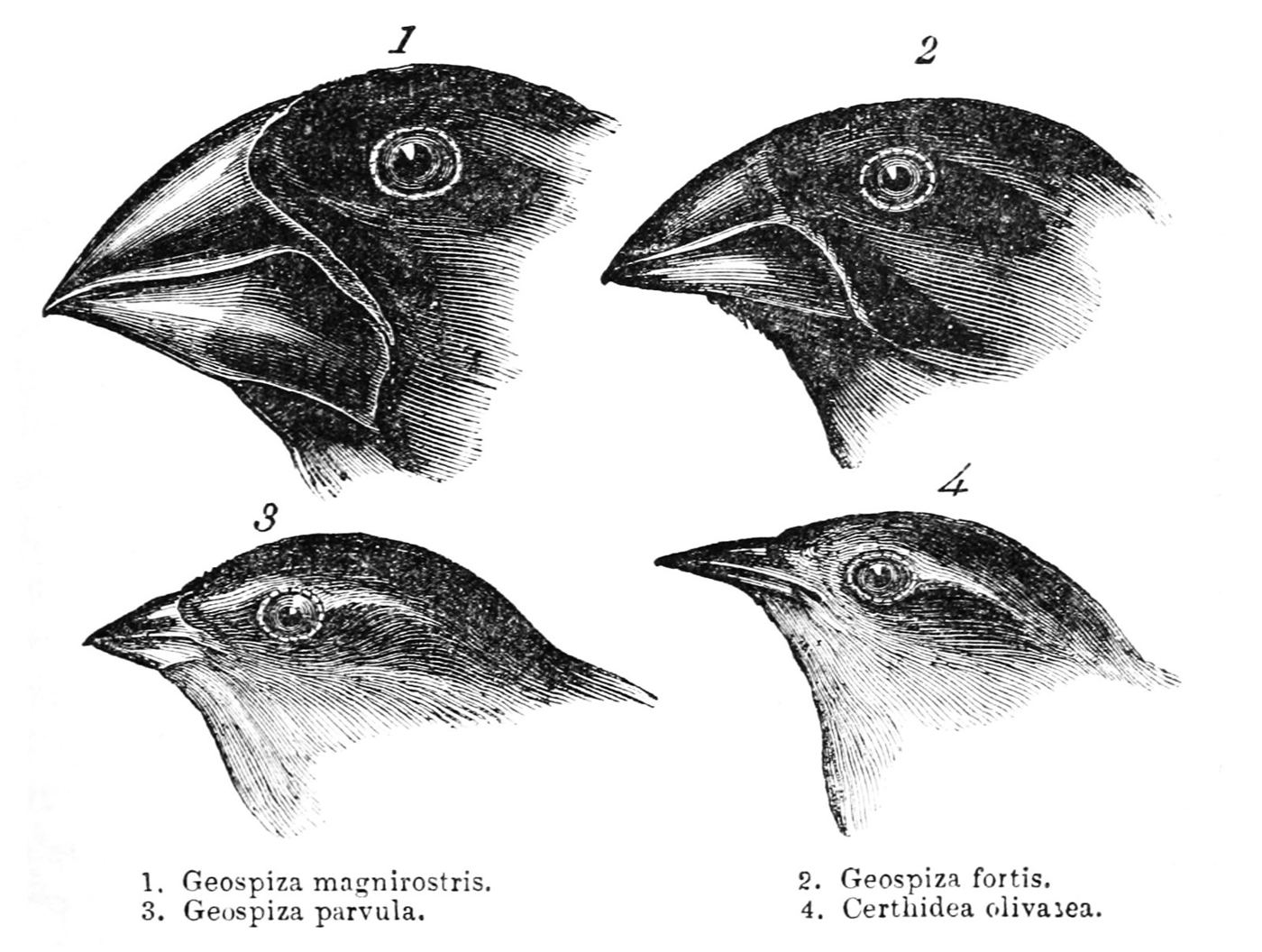
The voyage that set him on this path had ended long before. As a young man, Darwin sailed for nearly five years aboard HMS Beagle, a survey ship charting the coasts of South America, and he came home in 1836 with notebooks, specimens and a set of puzzles he could not put down. On the Galápagos Islands, the mockingbirds differed from island to island. In Patagonia, he dug up the fossils of giant extinct mammals that resembled, on a larger scale, the armadillos and sloths still living nearby. Why should the creatures of a region resemble the extinct creatures of the same region, and why should islands a few miles apart have their own distinct forms? In one of his private notebooks from 1837 he drew a small branching sketch, a tree in which species split from common ancestors, and wrote above it two words: “I think”.
The Origin does not begin with any of this. It begins, shrewdly, with something its Victorian readers already knew: domestic animals and plants. Breeders of pigeons, dogs, cattle and roses had for centuries produced remarkable changes simply by choosing which individuals were allowed to reproduce. Darwin, who bred pigeons himself and joined pigeon-fanciers’ clubs to learn from them, describes the extraordinary variety of fancy breeds, the pouters, fantails and tumblers, and argues that all of them descend from the wild rock pigeon. Two facts emerge from this opening chapter. Living things vary, and at least some of those variations are inherited. Given selection, small differences can accumulate into large ones.
The second step is to find a selector in nature. Darwin found it in an idea he credited to Thomas Malthus, the economist who had argued that human populations tend to grow faster than the food supply. In nature, far more offspring are born than can possibly survive. A single pair of elephants, the slowest breeders known, would in a few centuries leave millions of descendants if all survived; a cod lays millions of eggs. Most die young. Which ones survive is not entirely random: any variation that gives an individual a slight advantage in finding food, escaping predators or attracting mates will make it a little more likely to leave offspring, and those offspring will tend to inherit the advantage. Darwin called this process natural selection, by analogy with the breeder’s choice, and he insisted that, over the immense periods geology now made available, it could produce not just new breeds but new species.
What makes the book distinctive, and what I most admire in it, is the chapter Darwin titled “Difficulties on Theory”. He gives it to the objections that most threatened his idea, and he states them as forcefully as any critic could. How could something as intricate as the eye, with its lens and focusing and correction for colour, have been produced by gradual steps? Darwin concedes that the idea seems, in his words, absurd in the highest possible degree, and then shows that the animal kingdom contains a graded series of eyes, from simple light-sensitive spots to complex camera eyes, each useful to its owner. Where are the intermediate forms in the fossil record? He devotes a separate chapter to the imperfection of that record. How could instincts as elaborate as the hive-building of bees have evolved? He examines the cells of different bee species and shows how a simpler habit could have been refined. It is hard to think of another landmark book that spends so much of its length arguing against itself.
The remaining chapters gather evidence from every direction. Fossils show that species appear and disappear in a sequence, and that extinct forms resemble the living ones of the same region. The geographical distribution of plants and animals, especially on oceanic islands, makes sense if species descend with modification from colonists, and very little sense if each was created separately for its place. Bodies share deep similarities: the bones in a human hand, a bat’s wing, a porpoise’s flipper and a horse’s leg are arranged on the same plan, which is exactly what descent from a common ancestor would predict. Embryos of very different animals look alike in their early stages. Each line of evidence alone could be explained away; together they point in one direction.
The book contains only one illustration, and it is the logical heart of the argument: a fold-out diagram of lines branching and diverging through time, some dying out, some splitting again and again into new forms. It is the tree from the 1837 notebook, now made rigorous. In the text Darwin turns it into one of his most famous images, comparing the affinities of all living things to a great tree, whose green twigs are the living species and whose dead branches are the extinct ones, filling the crust of the earth with its broken limbs and covering the surface with its ever-branching and beautiful ramifications.
Darwin was largely silent in the Origin on human beings, saying only that light would be thrown on the origin of man and his history; he took up that subject twelve years later in The Descent of Man. He was also, inevitably, wrong or ignorant about some important things. He had no working theory of heredity. The mechanism he proposed in later work, in which tiny particles from every part of the body gathered in the reproductive cells, turned out to be false, and Gregor Mendel’s experiments with peas, which pointed to the right answer, went almost unnoticed until 1900. Only in the twentieth century, with genetics, population mathematics and eventually the discovery of DNA, was natural selection given the mechanism it needed. What is remarkable is how well the theory survived that synthesis: the gaps were filled in a way that confirmed and extended Darwin’s idea rather than replacing it.
The book ends with a single paragraph that is still one of the finest in scientific writing. Darwin asks the reader to contemplate an entangled bank, clothed with plants, with birds singing, insects flitting about and worms crawling through the damp earth, and to reflect that all these elaborately constructed forms, so different from each other, were produced by laws acting around us. There is grandeur in this view of life, he writes, that from so simple a beginning endless forms most beautiful and most wonderful have been, and are being, evolved. After so many pages of careful argument, the effect is not to diminish the living world but to deepen it. That is the lesson I take from the book as a whole: an explanation, honestly arrived at, need not remove wonder. It can give wonder better reasons.
Ayoub Khallok keeps this archive of essays, research, lessons and notes, written to understand things more clearly. More about Ayoub.