What Is Life?
Erwin Schrödinger's short, influential attempt to explain living things in the language of physics.
Published
26 October 2026
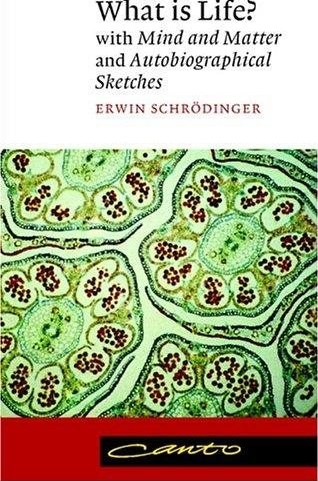
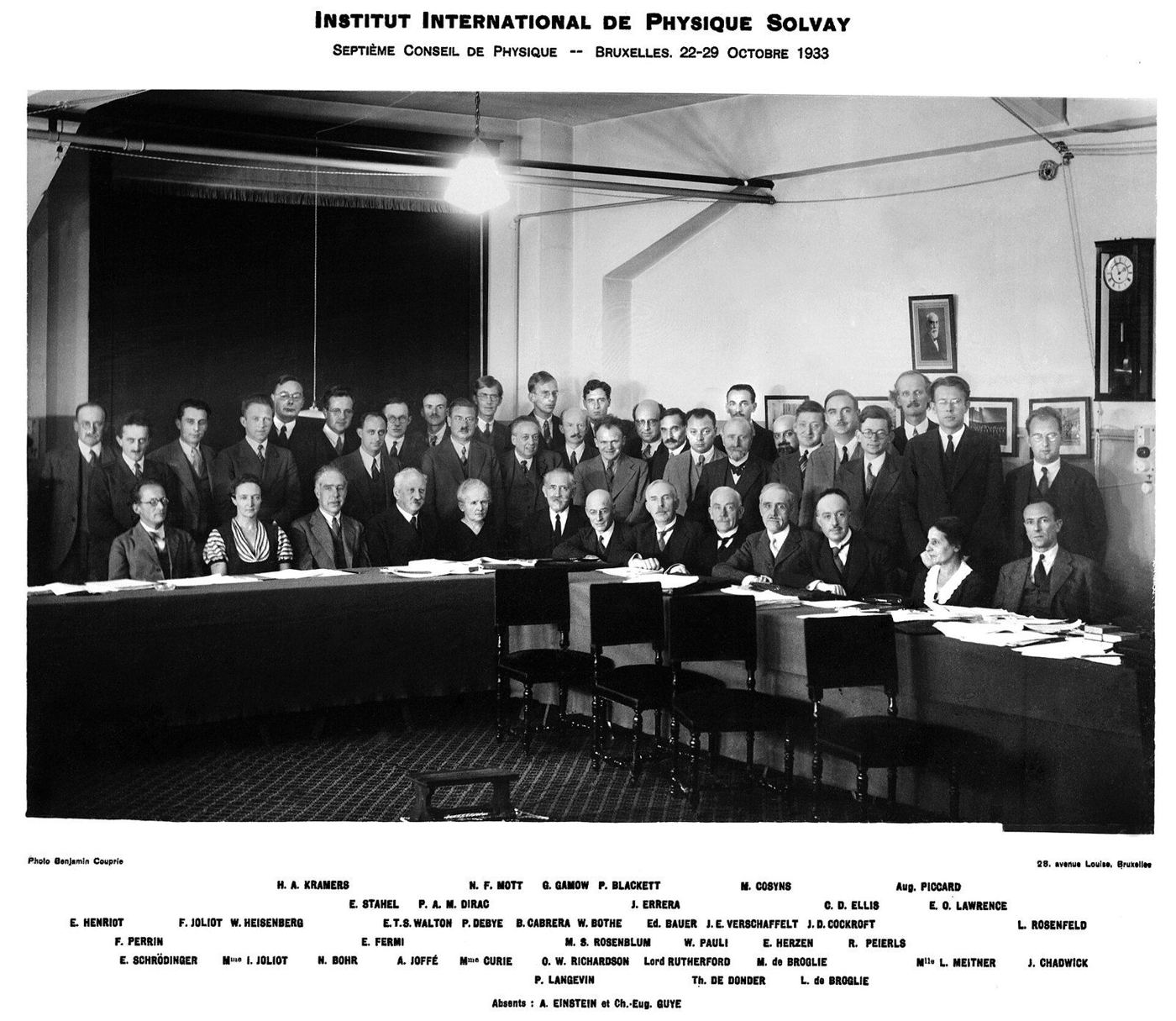
In February 1943, in the middle of the Second World War, Erwin Schrödinger gave three public lectures at Trinity College Dublin. He was by then one of the most famous physicists alive, a founder of quantum mechanics whose wave equation had earned him a share of the Nobel Prize ten years earlier. He had left Austria after its annexation by Nazi Germany and taken up a post at the new Dublin Institute for Advanced Studies, created for him by the Irish government. The lectures were on a subject far from his own field, and their title was a question: what is life? The audience was large, the talks were a public event, and the following year they were published as a short book that would turn out to be one of the most influential works of twentieth-century biology, although it was written by someone who was not a biologist at all.
Schrödinger’s question was narrower and sharper than the title suggests. He wanted to know how the events that take place inside a living organism, in space and time, could be accounted for by physics and chemistry. He began, as physicists like to, with a question that seems almost childish. Why are atoms so small? Or, put the other way round, why are we so large compared with them? His answer was that the laws of physics that govern large-scale objects, such as the behaviour of gases or the flow of heat, are statistical. They are reliable only because they average over enormous numbers of atoms, whose individual movements are random. An organism the size of a few atoms could not have orderly behaviour, because random fluctuations would overwhelm it. Order in large systems usually comes from numbers.
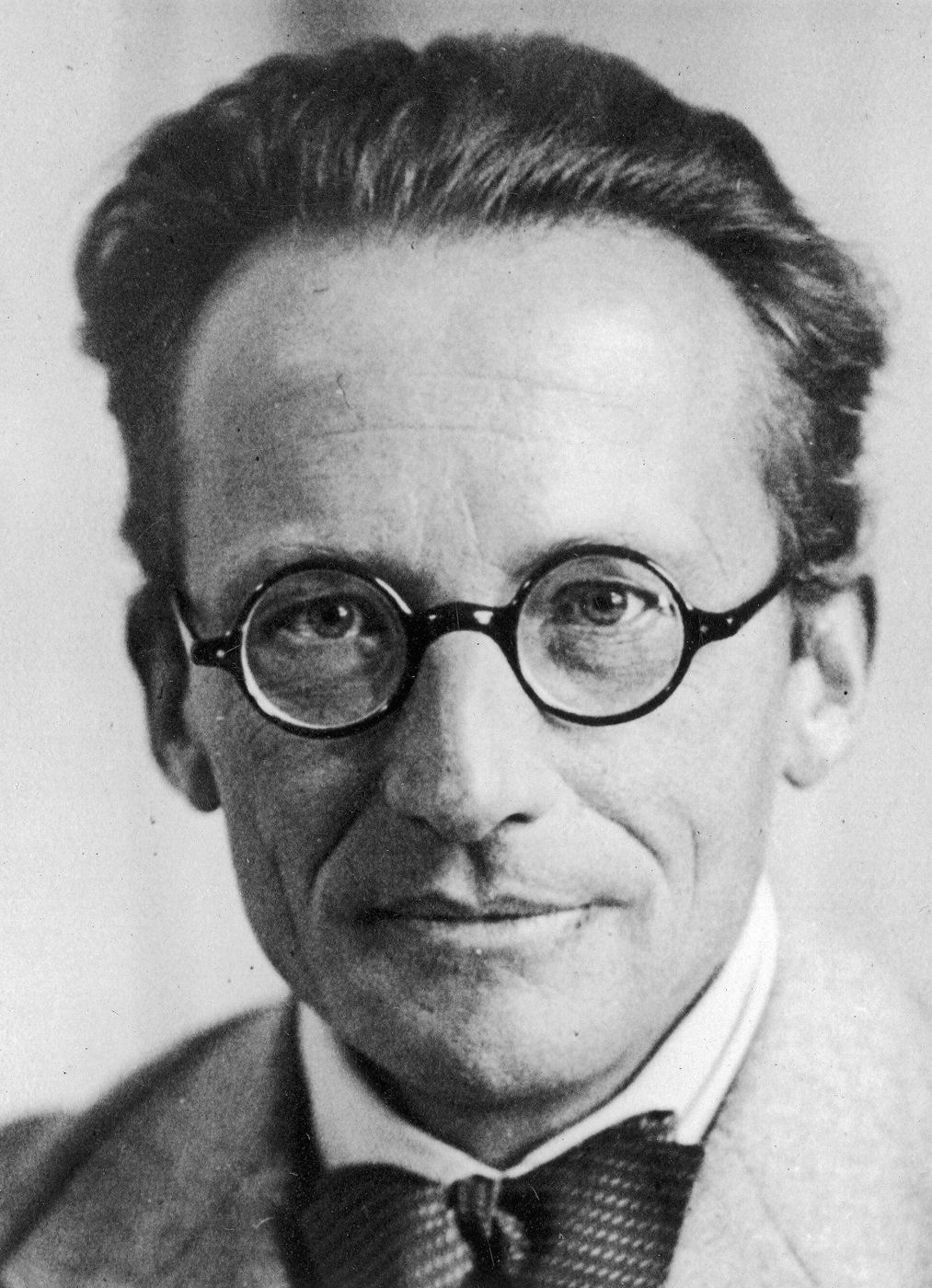
That created a puzzle, and it is the heart of the book. The hereditary material, which geneticists had shown resides in the chromosomes inside cells, is tiny. Estimates at the time suggested that a single gene might contain no more than a few thousand atoms, perhaps far fewer. Yet genes are passed on with astonishing fidelity over many generations. The Habsburg lip, Schrödinger notes, could be traced in portraits of the family across centuries. How could such a small structure resist the randomness that statistical physics predicts? Something other than averaging must be keeping it stable.
His answer drew on quantum mechanics. The stability of the gene, he argued, must be the same kind of stability that holds a molecule together, the discrete energy levels of quantum theory ensuring that a structure stays in one configuration unless it receives a large enough jolt to move it to another. Mutations, the rare sudden changes in hereditary traits that geneticists studied with X-rays, could then be understood as such quantum jumps. Schrödinger leaned heavily here on a 1935 paper by the physicist Max Delbrück and his colleagues Nikolai Timoféeff-Ressovsky and Karl Zimmer, and he presented their model to a wide audience for the first time.
The idea that made the book famous follows from this. If genes are molecules, what kind of molecule could carry the vast amount of information needed to specify an organism? An ordinary crystal, such as salt, repeats the same simple pattern over and over and so contains very little information. Schrödinger proposed that the hereditary material must be what he called an aperiodic crystal: a structure that is solid and stable like a crystal, but in which the arrangement does not repeat, so that the sequence of its parts can encode instructions. He compared it to the difference between ordinary wallpaper, with its endlessly repeated pattern, and a masterpiece of embroidery, such as a Raphael tapestry, which shows a meaningful design. He even used the word “code-script” for what the chromosomes contain, and pointed out, using Morse code as an example, how a small number of different symbols arranged in sequence could produce an enormous number of possible messages.
This was written a decade before James Watson and Francis Crick described the double helix of DNA in 1953, and at a time when many scientists thought that proteins, rather than DNA, were the more likely carriers of heredity. Schrödinger did not know what the molecule was. But his picture of a non-repeating molecular code was strikingly close to what was eventually found, and both Watson and Crick later said that the book had influenced their decision to work on the problem. Many of the physicists who moved into biology after the war, and helped to create molecular biology, cited it in the same way.
The second big idea concerns how living things maintain their order at all. The second law of thermodynamics says that, in an isolated system, disorder, measured by a quantity called entropy, tends to increase. Left to itself, everything runs down. Living things seem to defy this, building and maintaining extraordinarily ordered structures for long periods. Schrödinger’s resolution was that organisms are not isolated. They keep themselves organised by continually taking in order from their surroundings, in the form of food and, ultimately, sunlight, and giving back disorder, in the form of heat and waste. He described this, in a phrase that physicists have since criticised as imprecise, as feeding on negative entropy. The underlying point is sound and has become standard: life does not break the laws of thermodynamics. It exploits them, as a local pocket of order paid for by a larger increase of disorder elsewhere.
Not everything in the book has survived. Some of its speculation about how genes work was wrong in detail, and its final chapter, in which Schrödinger turns to the relationship between mind and matter and offers a personal, almost mystical view influenced by the Indian Upanishads, sits awkwardly with the rest and was reportedly controversial with his Catholic publisher in Dublin. Biologists have also pointed out that some of the questions he presented as new had already been discussed within their own field.
But the book’s lasting value lies less in its answers than in the way it asks its questions. A physicist looking at biology with fresh eyes asked what kind of physical object could store hereditary information and keep it stable, and his guess pointed directly towards what was later found. It is a short book, readable in an afternoon, and a reminder that living things, remarkable as they are, do not break the laws of nature. They use them.
Ayoub Khallok keeps this archive of essays, research, lessons and notes, written to understand things more clearly. More about Ayoub.
Enjoyed this piece? Follow along.
New essays, studies, lessons and notes arrive here a few times a month. There's no newsletter or algorithm, just an RSS feed for every section, so you can follow only what interests you.
SubscribeSubjectsScience, Philosophy
Filed inLibrary