The Structure of Scientific Revolutions
Paradigms, anomalies and how scientific fields actually change their minds.
Published
11 June 2026
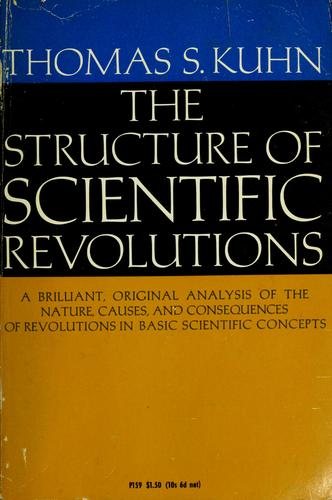
Before Thomas Kuhn, the usual picture of science was one of steady accumulation. Each generation of researchers added new facts to the pile left by the last, errors were gradually weeded out, and knowledge grew the way a building grows, one brick at a time. Kuhn, who had trained as a physicist before turning to the history of science, came to think that this picture was wrong, or at least badly incomplete. The Structure of Scientific Revolutions, published in 1962 as a monograph in a series on the unity of science, set out a different account. It became one of the most cited academic books of the twentieth century, and it gave the word paradigm to the rest of the language, where it has been used, and overused, ever since.
Kuhn later described the moment that started him on this path. As a graduate student preparing a lecture, he tried to read Aristotle’s physics and found it simply foolish, full of obvious mistakes about motion. Then, as he kept reading, he suddenly saw how Aristotle’s concepts fitted together on their own terms: his “motion” meant something much broader than ours, change of any kind, and once that was understood, the whole system made sense. The experience convinced him that the past of science could not be read as a series of wrong answers to our questions. Earlier scientists had often been asking different questions, in a different conceptual language.
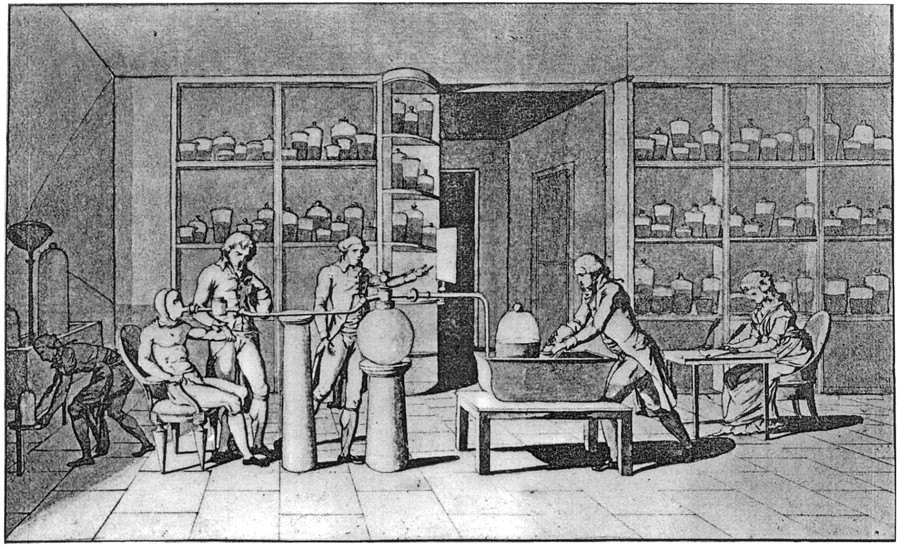
Most of the time, Kuhn argues, scientists do what he called normal science. They work within a shared framework, a paradigm, which tells them which problems are worth solving, which methods are legitimate, what counts as an acceptable answer, and which equipment and examples to learn from. Newtonian mechanics was a paradigm in this sense; so were Lavoisier’s chemistry and the wave theory of light. Normal science is a kind of puzzle-solving. The researcher does not question the foundations; the challenge lies in making nature fit them, extending the paradigm to new cases and sharpening its predictions. Kuhn insists that this is not a criticism. Normal science is productive precisely because people do not reopen the basics every morning. It allows a community to work in great depth on narrow problems that would never be tackled if everything were constantly in dispute.
Sooner or later, though, nature fails to cooperate. An experiment gives a result that does not fit, a prediction misses, an instrument shows something it should not. Kuhn calls these anomalies, and his account of how scientists treat them is one of the most convincing parts of the book. At first anomalies are set aside: blamed on faulty equipment, filed as open puzzles, or simply ignored. Only when they accumulate, or when one of them resists every attempt at repair and touches something central, does a field enter what Kuhn calls a crisis. Confidence in the paradigm weakens, rules loosen, and researchers begin proposing alternatives that would previously have seemed eccentric. Philosophy and debates about method, normally absent from a working laboratory, suddenly become interesting again.
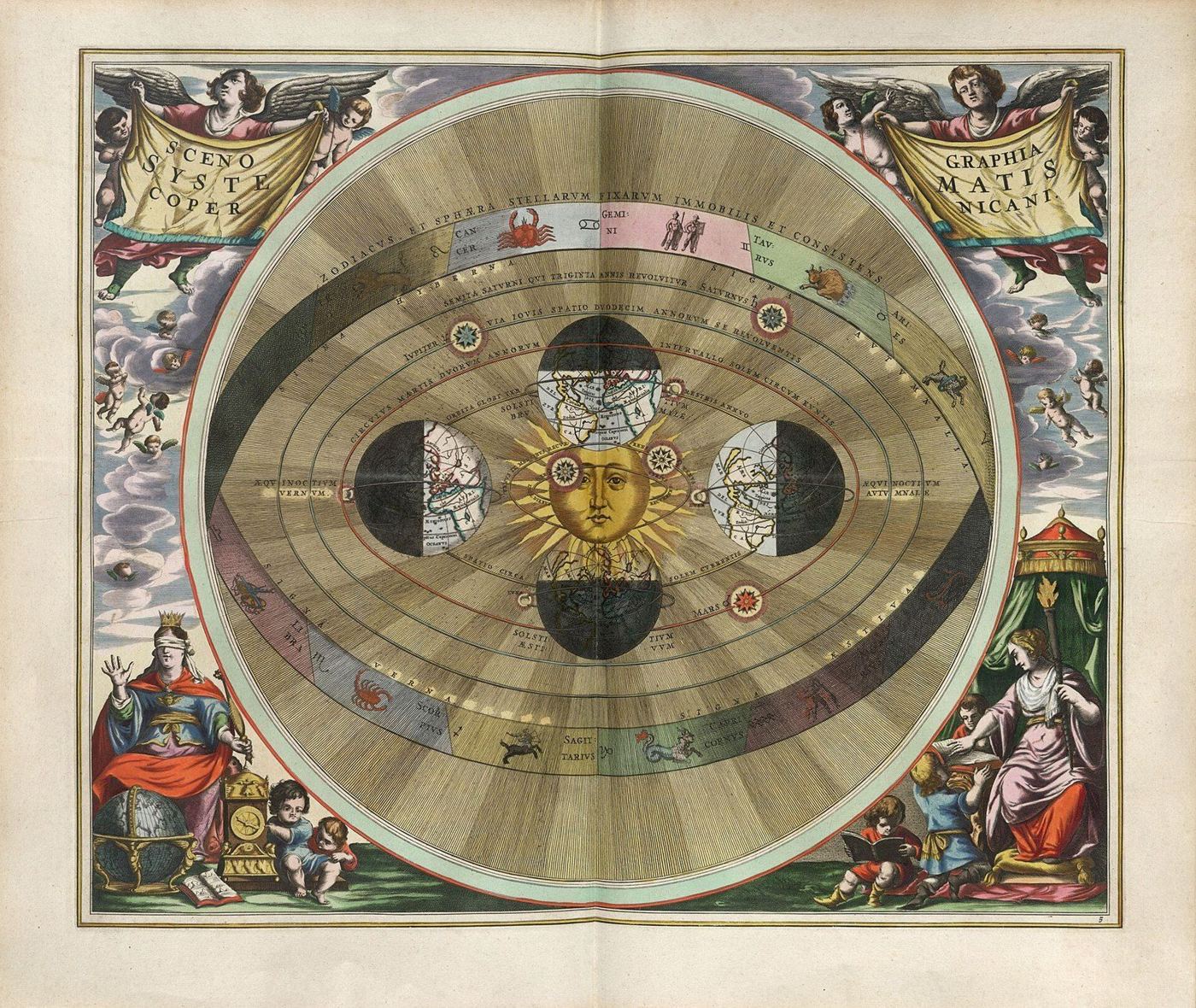
A scientific revolution, in Kuhn’s sense, is the replacement of one paradigm by another, and his examples are the great transitions of the history of science: from the Earth-centred astronomy of Ptolemy to the Sun-centred system of Copernicus; from the phlogiston theory of combustion to Lavoisier’s chemistry of oxygen; from Newtonian mechanics to Einstein’s relativity. The book’s most provocative claim concerns what happens during such a shift. Rival paradigms, Kuhn argues, are partly incommensurable. They do not just give different answers to the same questions. They disagree about which questions matter, and they use some of the same words with different meanings: “mass” in Einstein’s physics is not quite the “mass” of Newton’s. As a result, the choice between them cannot be settled entirely by logic and experiment, as though there were a neutral standpoint from which both could be judged. Kuhn compares the change to a gestalt switch, like the famous figure that can be seen as a duck or a rabbit, and suggests that after a revolution scientists work, in a sense, in a different world.
This is where many readers became uneasy. If paradigm choice is not fully decided by evidence, is science irrational? Is it, as some later writers argued, just one more social practice, its results shaped by power and persuasion rather than by nature? Kuhn himself rejected this conclusion. He argued that scientists choose between theories using shared values, such as accuracy, consistency, scope, simplicity and fruitfulness, but that these values can be weighed differently by different people, which is why reasonable experts can disagree for a time. He also maintained that science does make progress, in the sense that later theories solve more puzzles and solve them better, even if they are not steps towards a single final truth. I do not think his account makes science irrational. It makes it human, which is different.
The book has real weaknesses, and Kuhn acknowledged some of them. His central term was famously loose: the philosopher Margaret Masterman counted more than twenty different senses of paradigm in the text, and in a postscript written for the second edition of 1970 Kuhn tried to separate two of them, the whole set of shared commitments of a scientific community and the concrete exemplary problem-solutions that students learn from. Historians have also argued that his tidy cycle of normal science, crisis and revolution fits some episodes much better than others, and that many fields change through a messier mixture of gradual and sudden shifts.
What I take from the book is less a theory than a set of habits of attention. Progress in a field can be real without being smooth; long, quiet stretches of puzzle-solving can end in sharp breaks. Data alone rarely settles a deep disagreement, because people reasonably defend a working framework until a better one exists. And textbooks, by presenting each field as if it had always pointed towards the current view, hide how uncertain and contested the path really was. That last point seems to me the most useful. It is a good reason to read the history of a subject, and not only its latest summary.
Ayoub Khallok keeps this archive of essays, research, lessons and notes, written to understand things more clearly. More about Ayoub.